
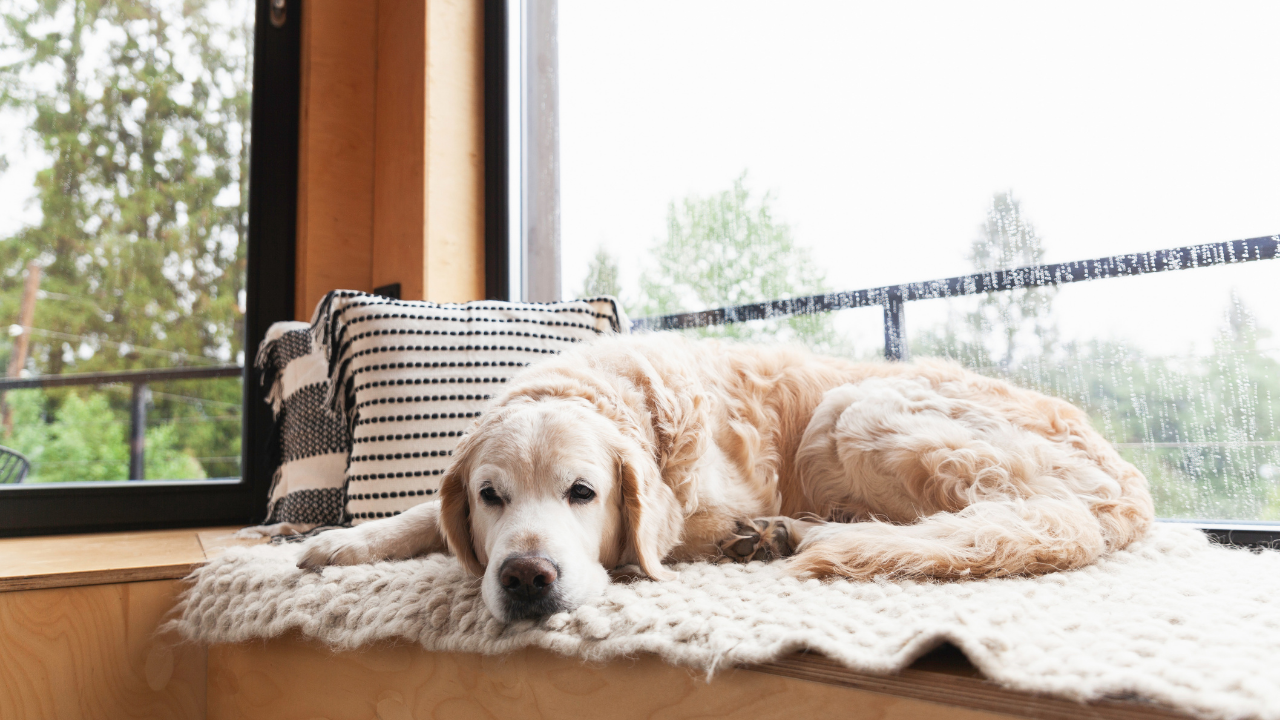
A calm dog does not always mean a quiet dog. Excitement, play, curiosity, and energy are normal parts of daily life.
How a dog switches between being active and resting often develops during everyday moments at home. In this article, we look at how routines, attention, activity, and downtime can shape the habits your dog builds each day.
We often think about calm behavior only when a dog is barking, jumping, pacing, or struggling to settle down. But those obvious moments are just one part of the story.
A lot of a dog’s day happens in between those big moments: waiting for food, resting while the house is busy, reacting to daily routines, or relaxing after activity. Noticing these quieter times can show what helps your dog settle or what might make it harder.
What Helps Your Dog Settle Again?
Calm Behavior Is More Than a Command
Calm behavior is different from obedience. It also does not mean your dog should always be quiet or still.
In daily life, calm can mean resting while the house is busy, waiting without getting too excited, watching something without reacting right away, or settling down after a walk, playtime, or excitement.
Dogs naturally shift between different energy levels during the day. How quickly they settle can depend on their age, personality, physical needs, past experiences, and surroundings. For example, a young, energetic dog may take longer to relax than an older dog with a calmer routine.
The goal is not to take away your dog’s enthusiasm, curiosity, playfulness, or excitement. These are all normal for dogs.
A better question is whether your dog can calm down after getting excited and settle when the situation allows.
Your Dog Is Practicing Habits All Day

Dogs learn from daily routines, even when we do not think of those moments as training.
A dog might learn that pawing or barking gets your attention. Excited greetings can become a habit whenever someone comes home. Familiar sounds or movements can signal a walk or meal, causing your dog to pace or get excited before anything even happens.
Quieter behavior is easy to overlook. Your dog might settle by the sofa, wait while you are in the kitchen, or choose their bed instead of following you everywhere, and these moments often go unnoticed.
When a behavior often leads to something your dog likes, it is more likely to happen again. But not every bark, jump, or burst of excitement is learned or just for attention.
It does mean that owners can start by noticing the behaviors they would like to see more often, especially the calm moments that already happen each day.
Make Calm Easier Before Asking for It
Calm behavior is easier for dogs when their daily routine includes a balance of activity and rest.
Meals, walks, play, and downtime do not have to happen at the same time each day, but a generally predictable routine can help your dog know what to expect. Regular chances for movement, sniffing, play, interaction, and mental challenges are also important, especially when they fit your dog’s needs.
Real downtime is just as important. Dogs do not need to be entertained all the time. Quiet periods let them rest without always moving on to the next activity.
Having a familiar place to settle can help too. This could be a bed, mat, appropriately introduced crate, or another comfortable spot where your dog can relax without being disturbed.
Transitions are important as well. After a walk, playtime, visitors, or other exciting events, letting things gradually quiet down can make settling easier than jumping right into the next activity.
The goal is not to have a strict schedule, but to create a daily routine where both activity and rest have their place.
Notice Calm When It Is Already Happening
You do not always have to ask for calm behavior before you can encourage it.
Begin by noticing when your dog settles on their own. Where do they like to rest? What happens right before they relax? Are there situations that make it harder for them to settle? Also, notice if your dog gets more attention when they are excited than when they are calm.
When your dog is relaxed, you can quietly acknowledge it. This might mean giving a small treat, gentle attention, letting them enjoy something they like, or just leaving them to rest.
The idea is not to make every quiet moment into a training session. Too much attention can actually make a calm dog more alert.
Instead, try to notice and support the calm behavior you want to see more often, while letting your dog stay relaxed.
Notice the calm moments
- When does your dog settle naturally?
- Where do they choose to rest?
- What seems to make settling easier?
When Difficulty Settling Deserves a Closer Look
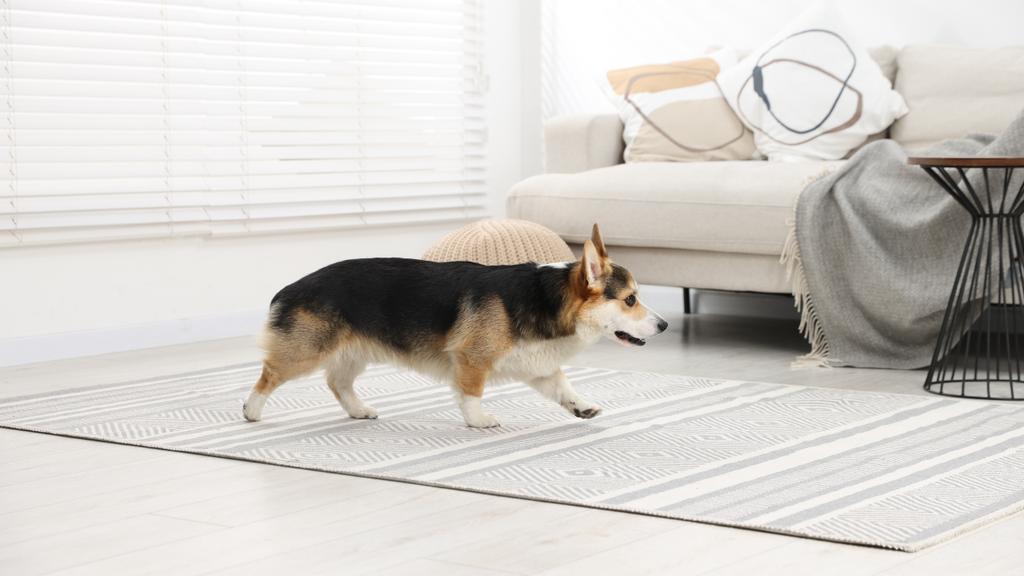
Some dogs have a harder time settling in certain situations. Before thinking something is wrong, check for recent changes in routine, unusual activity at home, less time for rest, changes in exercise or enrichment, or new visitors and places.
However, if you notice a sudden or ongoing change, it deserves more attention. Constant pacing, trouble resting, signs of pain or discomfort, strong fear or distress, aggression, or behavior that could be unsafe are not the same as normal excitement.
If the change cannot be explained or does not improve after you make reasonable adjustments at home, it may be time to get professional help. A veterinarian can check for health-related factors, while a qualified reward-based trainer or credentialed behavior professional may be useful when the concern is mainly behavioral.
The goal is not to treat normal energy as a problem, but to notice when something is clearly different.
Want a Visual Version of This Topic?
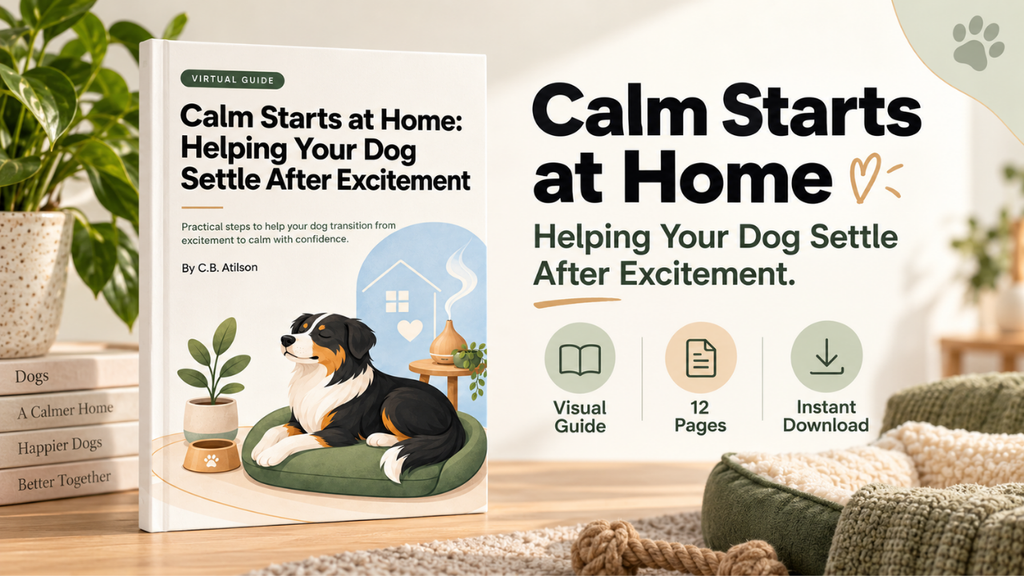
If you’d like a simple reference you can come back to, I created Calm Starts at Home: Helping Your Dog Settle After Excitement, a 12-page visual guide based on the ideas in this article.
It looks at everyday routines, activity and rest, household energy, settling spaces, and the small calm behaviors that are easy to overlook.
View the Visual Guide on Etsy →
Calm Is Built in Everyday Moments
Calm behavior often develops during small, everyday moments, not just in formal training sessions.
A steady routine, enough activity, real chances to rest, and noticing the quiet behavior your dog already shows can all help shape your dog’s daily rhythm.
Rather than only paying attention when excitement is a problem, try to notice what happens in between. These quieter moments can show you what helps your dog settle, recover, and feel at home.
Rather than only paying attention when excitement is a problem, try to notice what happens in between. These quieter moments can show you what helps your dog settle, recover, and feel at home.